You Won’t Believe These Bangkok Photo Spots — Pure Visual Magic
Bangkok isn’t just temples and traffic — it’s a visual playground hiding in plain sight. From rooftop views that melt into golden hour glow to quiet alleyways bursting with color, the city rewards those who look closer. I’ve walked miles chasing light and angles, and what I found went beyond postcard shots. These aren’t just places to snap photos — they’re moments that feel alive through the lens. Let me take you where the real magic happens.
The Skyline That Changes Everything – Iconic Rooftop Views
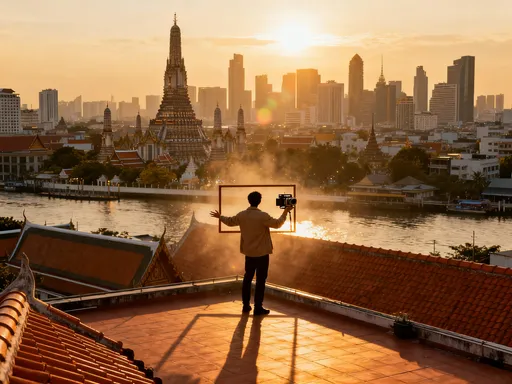
Bangkok’s skyline is a living tapestry of glass, steel, and light, best appreciated from above. The city’s most powerful visual impact comes not from ground level, but from its towering vantage points, where the urban sprawl stretches endlessly in every direction. Iconic spots like the Mahanakhon SkyWalk and Baiyoke Tower II offer panoramic views that redefine perspective. At these heights, the Chao Phraya River snakes through the city like a silver ribbon, while the evening sky transforms into a gradient of pinks, oranges, and deep purples during golden hour. This is when the city breathes — when traffic becomes flowing light and buildings glow like lanterns.
What makes rooftop photography in Bangkok so compelling is not just the scale, but the emotional shift it creates. Standing hundreds of meters above the streets, one gains a sense of calm amid the chaos below. The constant motion — tuk-tuks darting, river ferries gliding, pedestrians weaving — becomes a rhythmic pattern rather than a frenzy. For photographers, this elevation offers unparalleled composition opportunities: symmetrical city grids, reflections in skyscraper glass, and long-exposure shots that capture the dance of vehicle lights along elevated expressways. The key is timing. Arriving 90 minutes before sunset allows time to scout angles, adjust settings, and secure a prime spot before crowds gather.
While well-known rooftops draw tourists, lesser-known terraces in business districts like Sukhumvit and Sathorn often provide equally stunning, less crowded alternatives. Some office buildings allow public access during early evening hours, and boutique hotels sometimes welcome guests or visitors for drinks with a view. Always check access policies in advance and respect private spaces. Safety is paramount — railings are high, but tripods and overreaching for shots should be avoided. With a wide-angle lens and a steady hand, even smartphone photographers can capture breathtaking cityscapes. The real reward, however, is not just the image, but the quiet awe of seeing Bangkok from a realm few ever experience.
Temples Through a New Lens – Beyond the Postcard Shots
Bangkok’s temples are more than religious landmarks — they are masterpieces of design, light, and human devotion. Wat Arun, the Temple of Dawn, rises like a celestial ladder from the riverbank, its intricate porcelain mosaics catching sunlight in dazzling patterns. The Grand Palace, with its golden spires and mirrored walls, stands as a symbol of Thai artistry and royal heritage. Yet, most visitors photograph these sites from predictable angles — wide shots from across the river or crowded courtyards filled with tourists. To truly capture their essence, one must look deeper, waiting for moments when light, shadow, and ritual converge.
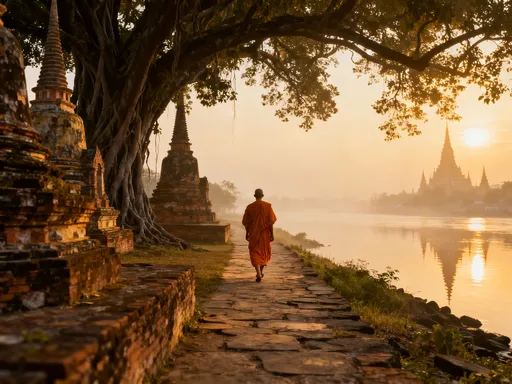
Early morning offers the best conditions. At sunrise, the western façade of Wat Arun glows with warm light, while long shadows stretch across its stepped towers. This is the time to focus on details: the reflection of its prang (central spire) in a rain puddle, the silhouette of a monk walking along a cloister, or the way sunlight filters through carved wooden eaves. At the Grand Palace, the contrast between bright daylight and the cool interiors of the Temple of the Emerald Buddha creates dramatic tonal shifts. Use a polarizing filter to reduce glare on gilded surfaces and bring out the texture of stucco and lacquer.
Equally important is patience. Waiting for a crowd to thin, for a ceremonial robe to flutter in the breeze, or for incense smoke to curl into a perfect spiral can yield images that feel alive. Avoid intrusive behavior — never block prayer paths or disrupt ceremonies for a shot. Instead, observe respectfully from a distance, using a telephoto lens to capture intimate moments without intrusion. Some of the most powerful temple photos are not of the structures themselves, but of the people who interact with them: an elderly woman lighting candles, children giggling near a guardian lion, or a novice monk receiving alms. These human elements add soul to the stone and gold, transforming a postcard into a story.
Street Art & Hidden Alleys – Bangkok’s Urban Canvas
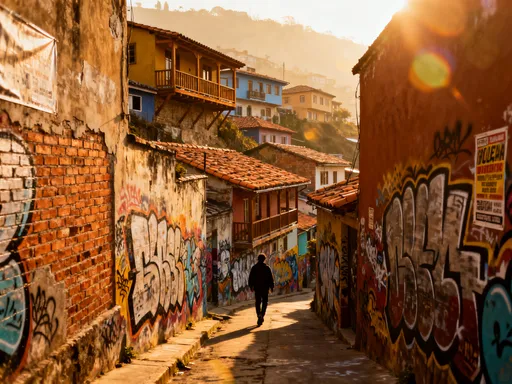
Beyond the grand monuments, Bangkok’s creative pulse beats strongest in its alleys and old neighborhoods. Charoenkrung and Talad Noi, once industrial zones, have evolved into open-air galleries where street art tells stories of identity, memory, and change. Murals cover shuttered shop houses, depict mythical creatures fused with modern life, or honor local elders and cultural icons. These artworks are not random graffiti — they are commissioned pieces from both Thai and international artists, part of a growing movement to revitalize historic districts through public art.
Walking through these streets feels like stepping into a living sketchbook. Weathered stucco peels to reveal layers of paint beneath, while neon signs from vintage businesses cast colorful glows at night. The contrast between old and new is striking: a century-old Chinese shrine sits beneath a mural of a robot monk, or a traditional noodle vendor serves customers in front of a surrealist painting of floating fish. For photographers, this environment offers endless opportunities for texture, color, and narrative. Use a 35mm or 50mm lens to capture both subject and context, preserving the atmosphere of the surroundings.
Respect is essential when photographing street art and candid scenes. While murals are meant to be seen, the people living and working in these areas deserve privacy. Always ask permission before photographing individuals, especially vendors or residents. Some murals are located in private courtyards or behind locked gates — admire them from the street unless access is clearly permitted. Early afternoon light works well for flat, even illumination, while golden hour casts long shadows that add depth to two-dimensional art. Over time, many of these pieces will fade or be painted over, making each photo a fleeting record of a dynamic, evolving city.
Canal Life and Riverside Moments – A Slower Side of Bangkok
While the city pulses with speed, Bangkok’s waterways offer a quieter rhythm. The Chao Phraya River is the city’s historic backbone, lined with temples, palaces, and bustling piers. But beyond the main river, a network of khlongs (canals) weaves through neighborhoods, revealing a different way of life. Here, wooden houses perch on stilts, children play on floating docks, and elders tend small vegetable gardens along the banks. These scenes, often overlooked by tourists, are among the most authentic and photogenic in the city.
Sunrise is the ideal time to capture this world. Mist rises from the water, softening the light and creating a dreamlike atmosphere. Long exposures can turn gentle ripples into smooth, mirror-like surfaces, perfectly reflecting the surrounding buildings and trees. The ferry system operated by the Bangkok Metropolitan Administration provides affordable and scenic access. Board a public boat at Tha Tien or Sathorn Pier and ride upstream or downstream, watching life unfold along the banks. Smaller khlongs like Khlong Bangkok Noi and Khlong Lat Mayom are best explored by local longtail boats, which can navigate narrow passages and stop at request.
Photographing canal life requires sensitivity. Many residents live in close quarters, and their daily routines — washing clothes, cooking meals, commuting by boat — are not performances. Approach with quiet observation, avoiding flash or loud equipment. Use a zoom lens to maintain distance while capturing detail. Focus on composition: the curve of a boat’s prow, the reflection of a temple in still water, or the contrast between a vibrant flower basket and a weathered wooden wall. These images speak of continuity — of a way of life that persists despite the city’s rapid transformation.
Markets That Pop With Color – Sensory Overload in Frame
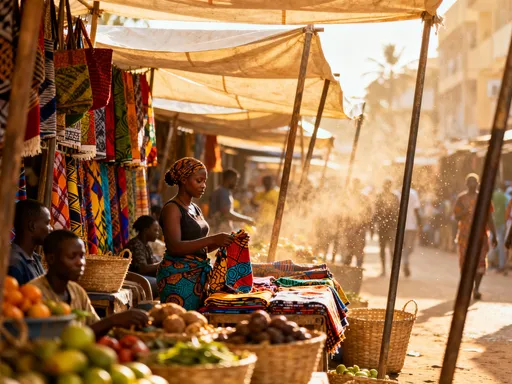
Bangkok’s markets are explosions of color, scent, and motion — visual feasts for any photographer. Pak Khlong Talat, the city’s 24-hour flower market, is a symphony of petals, stems, and hues. Rows of marigolds, orchids, and lotuses are arranged in vibrant heaps, their colors intensified by morning light. Vendors move quickly, bundling flowers for temple offerings and weddings, their hands a blur of activity. Nearby, Or Tor Kor Market offers a different kind of richness — fresh produce, grilled meats, and tropical fruits displayed with almost artistic precision. Here, a single durian can become a still-life subject, its spiky shell catching light in dramatic ways.
To photograph these markets effectively, one must embrace both chaos and detail. Wide-angle shots capture the overwhelming scale, while macro lenses reveal the dew on a rose petal or the texture of a mango’s skin. Natural light is strongest in the early morning, before the heat builds, making 5:00 to 7:00 a.m. the golden window. Use a fast shutter speed to freeze motion — a vendor tossing herbs, a customer selecting fruit, or steam rising from a food stall. For portraits, approach with a smile and a gesture of respect. Many vendors are accustomed to being photographed and may even pose if asked politely. A small purchase — a piece of fruit, a drink — often opens the door to a genuine connection.
Respect remains key. Avoid photographing people during private moments or without consent, especially in more intimate market corners. Some areas, like the backrooms of flower shops where bundles are prepared, may be off-limits. Instead, focus on still-life compositions: stacks of coconuts, woven baskets of chili peppers, or the reflection of neon signs in wet pavement. These images convey the market’s energy without intruding on its people. The result is a visual story of abundance, labor, and community — a tribute to the city’s beating heart.
Urban Nature – Green Spaces Framed for Impact
In a city defined by density, green spaces offer both relief and photographic contrast. Benjakitti Forest Park, once a tobacco factory site, has been transformed into a 120-acre sanctuary of trees, wetlands, and walking trails. Here, the sounds of traffic fade, replaced by birdsong and rustling leaves. The park’s central lake reflects skyscrapers in the distance, creating a surreal blend of nature and urbanity. Morning light filters through the canopy, casting dappled patterns on pathways, while mist rises from the water at dawn. These conditions are ideal for soft, ethereal images that emphasize tranquility and balance.
Rooftop gardens in modern complexes like EmQuartier and The Commons add another dimension to Bangkok’s green narrative. These elevated oases combine lush planting with contemporary design, featuring waterfalls, wooden decks, and shaded seating areas. They serve as both public retreats and visual metaphors — nature reclaiming space in the sky. Photographing them requires attention to perspective: a low angle can make small trees appear towering, while a drone (where permitted) reveals the geometric beauty of planted layouts against the city grid.
Other locations, such as Lumpini Park and Benjasiri Park, offer more traditional greenery with lakes, jogging paths, and outdoor exercise areas. Early mornings bring retirees practicing tai chi, families walking dogs, and street vendors selling coconut water. These scenes blend leisure with daily life, offering candid moments rich with human interest. Use a telephoto lens to isolate subjects — a dancer stretching under a tree, a couple sharing breakfast on a bench — without disrupting the moment. Urban wildlife, from monitor lizards basking near water to kingfishers diving for fish, adds unexpected drama. These green spaces remind us that even in a metropolis, nature finds a way — and creates some of the city’s most poetic images.
Night Visions – When Bangkok Lights Up the Lens
As daylight fades, Bangkok undergoes a transformation. Neon signs ignite, street food stalls glow like lanterns, and the city’s energy shifts into high gear. Night photography here is not just about capturing light — it’s about capturing mood. Long exposures turn traffic into rivers of red and white light, while reflections in wet streets double the brilliance. Areas like Sukhumvit Soi 11, Chinatown, and Rama VIII Bridge offer dramatic backdrops for creative shooting. Chinatown, in particular, is a visual overload — golden temples, red lanterns, sizzling woks, and crowds moving through narrow alleys illuminated by fluorescent tubes.
To master night photography, use a tripod or stabilize your camera on a solid surface. Start with settings around 10-30 seconds exposure, f/8 aperture, and ISO 100 to avoid noise. Manual focus is crucial, as autofocus struggles in low light. Experiment with light trails — photographing motorbikes weaving through intersections, or river ferries leaving streaks of light across the Chao Phraya. Reflections in puddles or glass buildings can create symmetrical, almost surreal compositions. Smartphones with night mode can also produce impressive results when held steady.
Safety and ethics matter after dark. Stick to well-lit, populated areas, and avoid photographing people without consent, especially in vulnerable situations. Some neighborhoods may have restrictions on tripods or commercial equipment — always be aware of local norms. The goal is not to exploit the night, but to honor its beauty. Whether it’s a lone noodle vendor under a single bulb or the skyline glowing from a distance, these images capture the soul of a city that never truly sleeps.
Photographing Bangkok is more than collecting images — it’s about tuning into its rhythm. Each spot tells a story not just of place, but of perspective. With the right eyes, even chaos becomes art.