Libreville’s Hottest Corners Where Commerce Meets Culture — You Gotta See This
When you think of West African cityscapes buzzing with energy and color, Libreville might not be the first to come to mind — but it should be. Tucked along Gabon’s Atlantic coast, the capital is a quietly rising star, where modern markets, vibrant streets, and local enterprise blend into something truly Instagram-worthy. I wandered its commercial heart, camera in hand, and found a side of urban Africa that’s authentic, stylish, and full of surprises. This is commerce with soul — and it’s begging to be seen.
First Impressions: The Pulse of Libreville’s Urban Energy
Arriving in Libreville, one is immediately met with a rhythm that feels both unhurried and industrious. Unlike the frenetic pace of Lagos or Abidjan, Libreville breathes at its own tempo — a city where commerce unfolds not in frantic bursts but in steady, confident waves. The streets hum with motorbikes weaving between taxis, vendors calling out from shaded corners, and the occasional delivery truck double-parked while goods are swiftly unloaded. There’s a sense of order beneath the apparent chaos, a system known intuitively to those who move through it daily. The city’s layout, shaped by French colonial planning and decades of organic growth, reveals a fascinating duality. On one side, pastel-hued colonial buildings with wrought-iron balconies stand alongside wide boulevards; on the other, modern glass-fronted shops and freshly paved walkways signal a city stepping into a new era.
What strikes the observant traveler most is how commerce here is not confined to formal spaces. It spills onto sidewalks, fills vacant lots, and thrives in the spaces between buildings. A woman sells ripe mangoes from a plastic crate beneath a baobab tree; a tailor works under a canopy, his sewing machine humming beside a rack of colorful boubous. Even traffic islands become impromptu retail zones, where vendors sell phone chargers, sunglasses, or bottled water during rush hour. This blend of structure and spontaneity gives Libreville its unique commercial texture — one that feels both grounded and dynamic. For the photographer or culturally curious visitor, these contrasts offer endless framing opportunities: the geometric symmetry of a colonial façade juxtaposed with the vibrant asymmetry of a roadside spice stall.
The city’s relaxed pace should not be mistaken for stagnation. In recent years, Libreville has undergone quiet but significant transformation. Infrastructure improvements, such as upgraded drainage systems and expanded pedestrian zones, reflect a growing emphasis on urban functionality and aesthetics. Yet, these changes have not erased the city’s character — instead, they’ve created a more navigable stage for its natural energy to shine. This balance between preservation and progress makes Libreville a compelling destination for those seeking authenticity without sacrificing comfort. The capital’s commercial rhythm is not loud or aggressive; it’s steady, inclusive, and deeply human — a pulse worth tuning into.
Owendo Market: Where Tradition Sells in Full Color
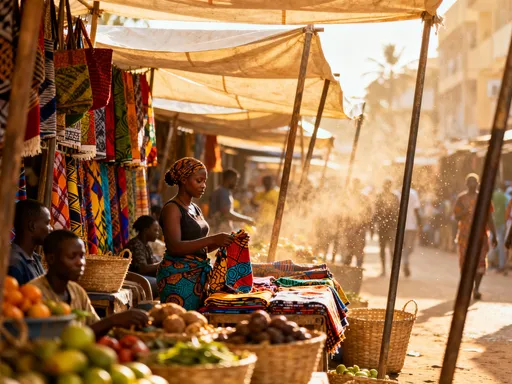
Just a short drive from the city center lies Owendo Market, a sprawling hub of activity that embodies the soul of Gabonese commerce. Far from the polished boutiques of downtown, this is where everyday trade happens in its most vivid form. The market unfolds under a patchwork of corrugated metal roofs and hand-stitched canvas canopies, casting dappled light over rows of stalls stacked high with goods. The air is thick with the scent of dried fish, smoked peppers, and freshly ground nutmeg — a sensory tapestry that tells the story of regional agriculture and centuries-old trade routes. It’s a place where tradition isn’t preserved behind glass but lived, bartered, and passed from hand to hand.
Textiles dominate one section, where bolts of wax-print fabric in bold geometric patterns are unfurled like flags of identity. Vendors drape them over their arms, demonstrating how a single piece can be transformed into a flowing dress or a stately man’s tunic. Elsewhere, pyramids of plantains, cassava, and yams rise from woven baskets, their earthy tones contrasting with the electric pinks and yellows of nearby chili heaps. Hand-carved wooden masks and baskets, made by artisans from the interior, sit beside modern plastic housewares, illustrating the seamless coexistence of old and new in daily life. For the visitor, every turn offers a new composition — a vendor’s hands arranging okra with practiced precision, sunlight catching the glint of a brass scale, or a child balancing a tray of packaged cookies on her head.
What makes Owendo especially compelling is its authenticity. Unlike tourist-oriented markets that perform tradition for cameras, this is a working marketplace first and foremost. Locals come here to shop, not to pose, which means candid moments unfold naturally. The best time to visit is early morning, when the heat is still manageable and vendors are setting up — a golden hour for photography that captures both preparation and purpose. Visitors are generally welcomed, but discretion is key. A smile and a simple greeting in French or Fang go a long way. While photographing, it’s respectful to ask permission when focusing on individuals, especially in close-up. But even without a lens, the market rewards slow observation: the rhythm of haggling, the laughter between neighbors, the quiet pride in a well-organized stall. Owendo isn’t just a place to buy things — it’s a living archive of Gabonese resilience and resourcefulness.
Avenue de Marché Central: The Beating Heart of Retail
If Owendo represents the roots of Libreville’s commerce, Avenue de Marché Central is its beating heart — a vibrant artery lined with shops, kiosks, and open-air stalls that pulse with daily life. Stretching through the city’s core, this thoroughfare is where formal and informal economies intersect in a dynamic dance. Here, a branded mobile phone shop with a neon sign stands shoulder to shoulder with a man selling SIM cards from a wooden tray. A tailor adjusts a mannequin in his doorway while a woman nearby arranges pirated DVDs in neat rows on a blanket. The street is alive not just with commerce but with conversation, where every transaction doubles as a social exchange.
The visual language of Avenue de Marché Central is one of layered abundance. Shopfronts are densely packed, their signage a collage of hand-painted letters, plastic letters bolted to walls, and digital displays blinking in French and local languages. Colors clash and harmonize — electric blue awnings, crimson fabric rolls, lime-green price tags — creating a streetscape that feels both chaotic and meticulously composed. This is urban design by necessity and intuition, where every inch of space is optimized for visibility and access. For photographers, the challenge and joy lie in finding order within the clutter: a symmetrical arrangement of stacked shoe boxes, the reflection of a vendor in a polished sunglasses display, or the silhouette of a woman against a backdrop of rainbow-colored umbrellas.
Fashion is a major driver of commerce here, and the street doubles as an open-air runway. Women in flowing Ankara dresses pass men in crisp button-downs and polished shoes, while teenagers sport imported sneakers and baseball caps worn at a tilt. Boutiques specialize in everything from ceremonial attire to casual wear, often stocking pieces made by local designers. Some shopkeepers drape mannequins in full ensembles, complete with head wraps and matching handbags, turning their storefronts into mini fashion editorials. These displays are not just for sale — they’re statements of style and self-presentation, reflecting a deep cultural value placed on appearance and dignity. Visitors are encouraged to observe with respect, understanding that these are not costumes but everyday expressions of identity. A gentle nod, a quiet “bonjour,” and a non-intrusive approach to photography will open doors — sometimes literally — to conversations and unexpected invitations.
Les Halles Centrales: Modern Meets Local in a Covered Market
Just off Avenue de Marché Central stands Les Halles Centrales, a renovated indoor market that represents a new chapter in Libreville’s commercial evolution. Once a typical covered market with narrow aisles and inconsistent hygiene, it has been transformed into a clean, well-organized space that honors tradition while embracing modern standards. The renovation, supported by municipal initiatives, reflects a growing emphasis on public health, urban planning, and the dignity of informal workers. Today, the market is a model of functional design — tiled floors, wide walkways, color-coded vendor zones, and proper ventilation that keeps the air surprisingly fresh despite the volume of goods on display.
Inside, the layout is intuitive and inviting. One wing is dedicated to fresh produce, where baskets of tomatoes, eggplants, and leafy greens are arranged with almost artistic care. Adjacent sections house meat, fish, and dairy, each with designated sinks and waste disposal systems. But it’s the flower and spice stalls that truly captivate the eye. Bouquets of hibiscus, marigolds, and gardenias burst with color, their petals glistening with morning mist. Nearby, mounds of turmeric, ginger, and dried thyme are piled in conical mounds, their rich hues creating natural still-life compositions. This is a paradise for flat-lay photography — every surface offers a potential canvas, from the geometric patterns of ceramic tiles to the organic symmetry of stacked fruit.
What sets Les Halles apart is its balance of order and authenticity. Unlike sterile supermarkets, it retains the warmth and humanity of traditional markets. Vendors greet regular customers by name, children dart between stalls on errands, and the hum of conversation never fades. The renovation hasn’t sanitized the experience — it’s elevated it. Shopkeepers take visible pride in their stalls, often decorating them with small potted plants or hand-painted signs. For visitors, this means a rare opportunity to engage with commerce in a clean, accessible environment without losing the cultural richness that defines African markets. Photography here is not only permitted but often welcomed, especially when done with a respectful eye. The overhead lighting, while practical, can be harsh at midday, so early morning or late afternoon visits yield softer, more flattering light. Les Halles Centrales isn’t just a market — it’s a vision of what urban commerce can become when tradition and progress walk hand in hand.
The Rise of Pop-Ups and Urban Boutiques in Quartier Louis
A short walk from the central markets, Quartier Louis offers a glimpse into Libreville’s creative future. Once a quiet residential area, it has emerged as a hub for youth-driven entrepreneurship and urban culture. Here, pop-up shops, artisan cafés, and design studios are redefining what commerce looks like in the Gabonese capital. These micro-businesses are often run by young designers, artists, and social media-savvy entrepreneurs who blend local aesthetics with global trends. A weekend pop-up might feature hand-printed tote bags with Gabonese proverbs, or a pop-up café might serve locally roasted coffee in minimalist ceramic cups — small acts of curation that signal a new kind of consumer culture.
What makes Quartier Louis especially photogenic is its intentional aesthetic. Unlike the organic clutter of the central markets, these spaces are designed for visual impact. Walls are painted in earthy tones or bold murals, furniture is repurposed with care, and lighting is chosen to flatter both products and patrons. Instagram corners are not an afterthought — they’re built into the experience. A rack of hand-beaded necklaces hangs against a textured backdrop; a chalkboard menu lists drinks in elegant script. These are not just stores — they’re experiences, carefully staged to celebrate Gabonese creativity in a modern context.
Yet, this trend is not about exclusivity. Many of these boutiques maintain strong ties to community, hosting art exhibitions, live music, or skill-sharing workshops. Prices remain accessible, and local materials — raffia, wood, natural dyes — are favored over imports. This fusion of style and substance has made Quartier Louis a magnet for young professionals, creatives, and culturally curious visitors. For photographers, the area offers a different kind of authenticity — one that’s curated but not contrived, modern but not disconnected. The best shots often come during events, when the energy is high and interactions feel natural. A candid laugh between friends at a pop-up bar, a vendor adjusting a display under string lights, or a muralist adding final touches to a wall — these moments capture the spirit of a city reinventing itself without losing its soul.
Street Life as Commerce: Mobile Vendors and Daily Hustle
Perhaps the most enduring symbol of Libreville’s commercial spirit is the mobile vendor — the woman balancing a tray of phone chargers on her head, the man cycling through traffic with a cooler of bottled water, the teenager selling airtime codes from a notebook. These micro-entrepreneurs are the lifeblood of the city’s informal economy, making essential goods accessible in every neighborhood. They require no storefront, no lease, no formal registration — just resourcefulness, resilience, and an intimate knowledge of foot traffic patterns. Their presence turns sidewalks into marketplaces, traffic jams into sales opportunities, and quiet corners into hubs of exchange.
Photographing these vendors requires sensitivity and timing. Early mornings offer the most intimate scenes — a woman arranging pastries on a cloth before the sun rises, or a fishmonger laying out his catch on a metal table. The light is soft, the pace is slower, and the focus is on preparation rather than performance. Midday brings a different energy — vendors seek shade, customers move quickly, and the heat amplifies every gesture. This is when the rhythm of survival is most visible: the quick handoff of cash, the practiced call of “minutes! minutes!”, the subtle negotiation of price without words. These moments, fleeting and unposed, are the essence of urban commerce.
For the ethical traveler, engagement should be grounded in respect. A purchase — even a small one — is the most meaningful way to participate. A bottle of water, a packet of cookies, a phone charger — these transactions create connection, not just consumption. Photography should follow, not lead, and always with permission when focusing on individuals. But beyond the lens, there’s value in simply observing — in recognizing the dignity in every transaction, the pride in every display, the ingenuity in every makeshift stall. These vendors are not just selling goods; they are sustaining families, building futures, and shaping the city’s economic landscape one small sale at a time.
Why Libreville’s Commercial Scenes Deserve the Spotlight
Libreville’s markets, streets, and pop-ups are more than places to buy things — they are living narratives of resilience, identity, and cultural continuity. In a world where global retail often flattens local character, these spaces stand as testaments to the enduring power of community-driven commerce. Every transaction here carries meaning: a grandmother choosing fabric for her granddaughter’s coming-of-age ceremony, a young man buying his first suit for a job interview, a mother bargaining for the best price on vegetables to feed her family. These are not isolated acts — they are threads in a larger tapestry of Gabonese life.
For travelers, shifting focus from monuments to markets offers a deeper, more authentic understanding of a place. The beauty of Libreville lies not in grand architecture or tourist spectacles, but in the quiet confidence of a woman arranging her stall at dawn, the precision of a tailor’s scissors, the laughter between friends at a pop-up café. These moments, often overlooked, reveal the true rhythm of the city — one built on connection, creativity, and care. They challenge the stereotype of African cities as chaotic or underdeveloped, instead presenting a vision of urbanity that is resourceful, stylish, and deeply human.
Moreover, these commercial spaces are sites of quiet transformation. As youth entrepreneurs introduce new formats and aesthetics, and as municipal projects improve infrastructure, Libreville is proving that modernization need not erase tradition. Instead, the two can coexist, enriching each other in unexpected ways. The city’s commercial scenes deserve attention not just for their visual appeal, but for what they represent: a future built on local knowledge, cultural pride, and everyday innovation. To walk through Libreville’s markets is to witness the pulse of a capital stepping into the light — not with fanfare, but with purpose.
Libreville’s commercial areas aren’t just places to shop — they’re living galleries of Gabonese life. From market alleys to sidewalk stalls, every corner pulses with color, purpose, and personality. For the curious traveler with a lens, this city offers a rare blend: authenticity styled with instinctive flair. It’s not about perfection — it’s about realness, rhythm, and the quiet confidence of a capital stepping into the light.