Hiking Trails That Lead to Bologna’s Hidden Food Treasures
You know that feeling when a mountain view takes your breath away—then a fresh plate of handmade tortellini brings you back to life? In Bologna, Italy, hiking isn’t just about the climb—it’s about what waits at the end: real food, made by real people. I never expected that a trail through the Tuscan-Emilian Apennines would lead me to a small farmhouse selling PDO Parmigiano Reggiano or a family-run acetaia with balsamic vinegar aged over 25 years. This is more than a trek—it’s a taste of tradition with every step. Here, the land doesn’t just feed the body; it nourishes the soul. And for travelers who value authenticity, connection, and quiet beauty, Bologna offers a rare gift: the chance to walk slowly, eat deeply, and discover Italy as it has been for generations.
Why Bologna is a Hiker’s Secret Food Paradise
Bologna, often celebrated as Italy’s culinary capital, is surrounded by a landscape that seamlessly blends natural beauty with agricultural richness. Nestled at the foot of the Tuscan-Emilian Apennines, the city sits where fertile plains meet rising hills, creating an ideal environment for both outdoor exploration and artisanal food production. The region’s mild climate, abundant rainfall, and nutrient-rich pastures support a thriving ecosystem that has sustained generations of farmers, cheesemakers, and vintners. It is this harmony between terrain and tradition that makes Bologna a unique destination for the food-loving hiker.
What sets this area apart is not just the availability of delicious food, but the deep connection between the land and the people who work it. The Apennine foothills are dotted with small family farms that have preserved centuries-old methods of food crafting. These are not tourist-driven operations but working homesteads where every wheel of cheese, jar of vinegar, or cured meat reflects a lifetime of care. Hiking through these hills offers more than scenic vistas—it provides access to the source of some of Italy’s most cherished ingredients.
For women between 30 and 55, many of whom balance family, career, and personal well-being, this kind of travel resonates on a deeper level. It’s not about ticking off landmarks or chasing Instagram moments. It’s about slowing down, reconnecting with nature, and engaging the senses in a meaningful way. The act of walking through sun-dappled forests, crossing stone bridges over clear streams, and arriving at a rustic farmhouse for a tasting of fresh cheese feels like a return to something essential—a reminder that good things take time, and that the best experiences often come after a little effort.
Moreover, the region’s infrastructure supports accessible, well-marked trails that cater to a range of fitness levels. Whether you’re an experienced trekker or someone who enjoys a peaceful woodland stroll, there’s a path that leads to a culinary discovery. And unlike crowded city tours, these hikes offer solitude, reflection, and the chance to interact with locals in an authentic setting. In Bologna, the journey and the reward are equally nourishing.
Top Hiking Routes with Culinary Payoffs
One of the most celebrated trails in the region is the Via degli Dei, or the “Road of the Gods,” a historic route that stretches approximately 130 kilometers from Florence to Bologna. While some hikers complete the entire journey over several days, others choose to walk shorter segments that still offer dramatic scenery and cultural encounters. The final stretch, from La Porretta Terme to Bologna, is particularly rewarding, as it descends through chestnut forests and vineyards into the rolling hills surrounding the city. Along the way, trail markers guide hikers past small farms and agriturismi where regional specialties are prepared with pride.
Another excellent option is the trail connecting Monte Sole to Castel del Rio, a moderate 15-kilometer hike that traverses wartime memorials, ancient stone villages, and open meadows. This route is rich in history and natural beauty, but its true charm lies in the local food stops that dot the path. Near the halfway point, hikers can pause at a family-run farmhouse that opens seasonally to offer tastings of fresh ricotta, honey, and house-cured salumi. These moments of connection—sharing a meal with a farmer who speaks limited English but welcomes you with warmth—create memories that last far longer than any photograph.
For those seeking a shorter, more accessible hike, the hills around the Santuario di San Luca provide a perfect half-day adventure. The iconic white basilica sits atop a forested ridge just outside Bologna, reachable by a well-paved pedestrian path that winds through olive groves and oak trees. While this route attracts many visitors, few realize that nearby side trails lead to small producers of artisanal pasta and cheese. With a local map or guided tour, it’s possible to extend the walk into the surrounding countryside and discover hidden food treasures, such as a hillside dairy that ages Parmigiano Reggiano using only milk from grass-fed cows.
Each of these trails offers more than physical exercise—it provides a narrative. The story of the land unfolds with every step: the scent of wild herbs on the breeze, the sound of goats in the distance, the sight of terraced fields carved into steep slopes. And at the end of each journey, there is food—not as a luxury, but as a celebration of place and perseverance. These routes are not just paths through nature; they are threads connecting hikers to the heartbeat of Emilia-Romagna’s culinary soul.
Parmigiano Reggiano: The Cheese That Rewards the Climb
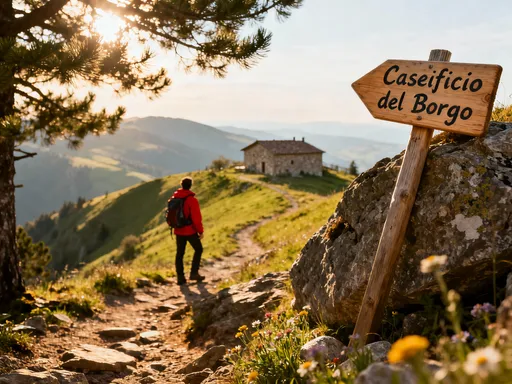
No visit to Bologna is complete without experiencing the region’s most famous export: Parmigiano Reggiano. But to truly understand this golden-hued cheese, one must go beyond the supermarket shelf and visit the dairies where it is still made by hand. Scattered throughout the Apennine foothills, small-scale caseifici (cheese factories) follow a production process unchanged for over 800 years. Each wheel begins with milk collected twice daily from local farms, cooked in copper vats, and carefully shaped, salted, and aged for a minimum of 12 months—though many are aged far longer.
Hikers who venture into these rural areas often find that a well-timed visit to a dairy can be the highlight of their journey. Many producers welcome guests during morning or early afternoon hours, offering guided tours that explain each stage of the process. Visitors watch as massive wheels are lifted from brine baths, inspected for quality, and stamped with the official seal that guarantees authenticity. The air in these dairies is warm and fragrant, filled with the scent of milk, wood, and aging cheese—a sensory experience in itself.
What makes Parmigiano Reggiano from this region so exceptional is its terroir. The high-altitude pastures, fed by pure mountain springs, produce milk with a unique fat composition and mineral balance. This, in turn, influences the cheese’s texture and depth of flavor. A wheel aged for 24 months or more develops nutty, crystalline notes that melt on the tongue—a far cry from the pre-grated versions found in stores. Tasting it in the place of its origin, perhaps paired with a spoonful of local honey or a slice of fresh bread, is a moment of pure indulgence.
For women who appreciate quality ingredients and home cooking, this experience is both inspiring and affirming. It reaffirms the value of patience, craftsmanship, and seasonality—principles that are increasingly rare in modern life. And unlike mass-produced foods, each wheel of Parmigiano Reggiano carries a story: of the farmer who tended the cows, the cheesemaker who shaped the curds, and the family that has guarded the recipe for generations. To taste it at its source is to participate in that legacy.
Balsamic Vinegar Adventures in Rustic Acetaie
Just beyond Bologna’s borders, in the neighboring provinces of Modena and Reggio Emilia, lies another culinary treasure: traditional balsamic vinegar. Unlike the commercial versions sold in supermarkets, true balsamic is a labor of love, aged for years—sometimes decades—in a series of wooden barrels. Each drop is rich, complex, and deeply aromatic, with a balance of sweetness and acidity that elevates even the simplest dish.
These vinegars are made in small cellars known as acetaie, often located in the attic spaces of historic farmhouses. The process begins with cooked grape must—typically from Trebbiano or Lambrusco grapes—which is transferred into a series of barrels made from different woods, such as oak, chestnut, cherry, and juniper. Each year, a small amount is drawn from the smallest barrel for bottling, and the others are topped up in succession, creating a solera-style aging system. This method concentrates the flavors over time, producing a vinegar that is more akin to a fine wine or spirit than a condiment.
Some hiking trails in the region pass near family-run acetaie that open to visitors by appointment. These visits are intimate and personal, often led by a family member who shares stories of how the vinegar has been passed down through generations. Tastings are conducted with reverence: a few drops on a spoon, allowed to warm in the hand before being tasted. The experience is not about quantity but about savoring the depth of flavor—notes of fig, plum, caramel, and spice unfolding slowly on the palate.
For travelers who value tradition and authenticity, these moments are priceless. They offer a glimpse into a way of life that prioritizes care over convenience, depth over speed. And for women who manage households and meals, the lesson is clear: true flavor cannot be rushed. Just as a mother nurtures a family over time, so too does a family nurture a vinegar cellar, tending to it year after year. The result is not just a product, but a living heirloom.
Cured Meats and Local Farms Along the Trail
Emilia-Romagna is also renowned for its salumi, a category of cured meats that includes world-famous specialties like mortadella and prosciutto di Parma. While these are available in markets and restaurants throughout Bologna, the most authentic experiences come from visiting the small farms where they are still made using traditional methods. High in the Apennines, where cool mountain air and natural humidity create ideal curing conditions, families hang hams and sausages in ventilated cellars, allowing them to age slowly and develop rich, nuanced flavors.
Hikers who explore the rural trails often encounter these farms tucked into valleys or perched on hilltops. Some operate as agriturismi, offering overnight stays and meals made entirely from estate-grown ingredients. Others open their doors for tastings on weekends or during harvest seasons. A typical visit might include a walk through the property, a look at the curing rooms, and a seated tasting of sliced prosciutto, spicy salami, and lardo served with fresh bread and local wine. The experience is informal, warm, and deeply satisfying.
What sets these producers apart is their commitment to sustainability and animal welfare. Pigs are often raised on open pastures, fed with natural grains, and treated with care. The curing process avoids artificial preservatives, relying instead on salt, time, and airflow. This attention to detail results in meats that are not only delicious but also aligned with the values of mindful eating and ethical consumption—principles that resonate strongly with today’s health-conscious travelers.
For women who prioritize quality ingredients for their families, these visits offer both education and inspiration. They demonstrate how food can be both simple and extraordinary when rooted in tradition and respect for the land. And unlike industrial processing, where food is separated from its source, here the connection is immediate and tangible. You see the animals, meet the farmers, and taste the results—all in one seamless experience.
Practical Tips for Food-Focused Hiking in Bologna
Planning a hiking and food-tasting journey in Bologna requires thoughtful preparation, but the rewards far outweigh the effort. First, consider the season. Spring and early autumn offer the most favorable weather—mild temperatures, blooming wildflowers, and fewer crowds. Summer can be warm, especially at lower elevations, while winter trails may be icy and require proper gear. Checking local weather forecasts and trail conditions before departure is essential.
When selecting routes, opt for well-marked paths with clear signage. The CAI (Club Alpino Italiano) maintains an extensive network of trails, and their maps are reliable and widely available. For those unfamiliar with the terrain, joining a guided tour can enhance both safety and cultural understanding. Many local guides speak English and can arrange visits to private producers who may not be listed online.
Transportation is another key consideration. While Bologna has an efficient public transit system, reaching remote trailheads often requires a combination of train, bus, and walking. Some hikers choose to rent a car for greater flexibility, allowing them to explore multiple farms in a single day. If using public transport, plan return times carefully, as rural services can be infrequent.
When visiting food producers, always call ahead or book appointments when possible. Many farms operate on a seasonal basis and may only welcome guests during certain hours. Respect for private property is paramount—stay on marked paths, avoid entering restricted areas, and follow all guidelines provided by hosts. Bringing a small gift, such as a bottle of wine or a box of cookies, is a thoughtful gesture that reflects appreciation.
Packing wisely ensures comfort and safety. Wear moisture-wicking clothing and sturdy hiking shoes with good traction. Carry a refillable water bottle, a light snack, a rain jacket, and a small backpack. A notebook or journal is useful for recording impressions, recipes, and contacts. And don’t forget your camera—but remember that the best souvenirs are often the memories you carry home.
How This Journey Changes the Way You Travel
Hiking to Bologna’s hidden food treasures does more than satisfy the appetite—it transforms the way we think about travel. In an age of fast-paced itineraries and digital distractions, this kind of journey invites us to slow down, pay attention, and engage with the world through our senses. Each step through the Apennines becomes a meditation on presence. Each taste of cheese, vinegar, or cured meat becomes a lesson in patience and care.
For women who have spent years nurturing others—raising children, supporting partners, managing homes—this experience offers a rare form of renewal. It is not escape, but reconnection. Reconnection to nature, to tradition, to the simple joy of discovering something beautiful through effort and curiosity. There is a quiet pride in arriving at a farmhouse after a long walk, greeted not as a tourist, but as a guest. In that moment, you are not just consuming food—you are participating in a centuries-old rhythm of life.
This model of travel—grounded, intentional, and deeply human—has the power to reshape our expectations. It reminds us that the best experiences are not always the most convenient or the most photographed. They are the ones that require presence, respect, and a willingness to listen. Bologna, with its seamless blend of nature and nourishment, offers a blueprint for this kind of journey.
So the next time you plan a trip, consider walking toward your next meal. Let the path be part of the pleasure. Let the effort deepen the reward. And let the flavors of the Apennines remind you that the most meaningful adventures are those that feed both body and spirit.