Jungle, Canals, and Sky-High Trees – You Gotta See This Place
Hidden in the northeast corner of South America, Suriname’s capital Paramaribo isn’t just about colonial streets and markets – it’s a gateway to some of the most untouched natural landscapes on the planet. I never expected to find rainforest canopies towering over silent rivers, or wildlife thriving just hours from the city. This is nature in its purest form: raw, alive, and waiting. If you're craving real wilderness, you need to experience this. With over 90% of its land covered in dense tropical forest and waterways that pulse like veins through the green heart of the continent, Suriname remains one of Earth’s best-kept secrets. For travelers seeking authenticity over convenience, silence over noise, and life in its most untamed state, this small nation offers a rare invitation – to step beyond the map and into the wild.
The Unexpected Wild Side of Paramaribo
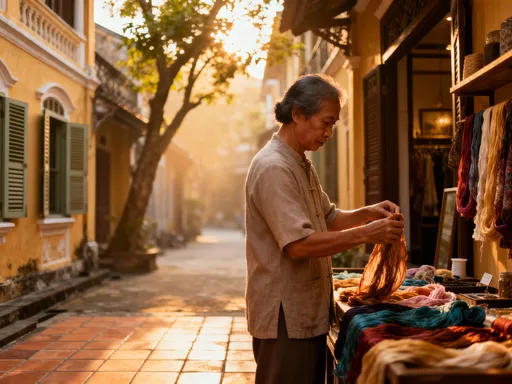
Most visitors arrive in Paramaribo expecting a quiet colonial capital with Dutch-influenced architecture, bustling street markets, and a relaxed Caribbean pace. And while all of that is true, few realize they are standing at the edge of one of the last great wilderness frontiers. Just a short journey from the city limits, the asphalt gives way to red dirt roads, then disappears entirely as rivers and forest paths take over. Within two to three hours by boat or 4x4 vehicle, travelers can reach areas where human presence is minimal and nature unfolds in uninterrupted grandeur.
The proximity of such pristine ecosystems to an urban center is extraordinary. In an age when true wilderness is increasingly rare, Suriname stands out as a sanctuary where rainforests remain intact, rivers flow freely, and biodiversity thrives. The Amazon may be better known, but Suriname’s forests are equally rich and far less visited. This makes the country not only a haven for ecologists and conservationists but also a dream destination for travelers who value authenticity and depth over photo ops and crowded trails.
What sets Paramaribo apart as a gateway is its role as a cultural and logistical hub. From here, guided expeditions launch daily into surrounding nature reserves, Indigenous and Maroon communities, and remote river systems. These journeys are not packaged tours with rigid itineraries but immersive experiences shaped by local knowledge, seasonal rhythms, and the unpredictability of wild places. Whether you're spending a day hiking near a forest reserve or embarking on a multi-day river expedition, the transition from city life to deep nature feels both seamless and profound.
Local operators emphasize low-impact travel, ensuring that access does not come at the cost of degradation. Trails are kept simple, campsites are temporary, and group sizes are limited. This respect for balance is woven into the national identity – Suriname has long prioritized environmental protection, with nearly 80% of its territory under some form of conservation status. For the mindful traveler, this means visiting a place where nature isn't just preserved in theory but actively protected in practice.
Brownsberg Nature Park: Where Adventure Meets Serenity
One of the most accessible yet profoundly beautiful escapes from Paramaribo is Brownsberg Nature Park, located about two hours south of the capital. Nestled within a shield of ancient rock formations and surrounded by endless stretches of rainforest, this protected area offers a perfect blend of adventure and tranquility. It is managed by the Foundation for Nature Conservation in Suriname (STINASU), which ensures sustainable tourism practices while maintaining the park’s ecological integrity.
The park’s crown jewel is the Voltzberg, a massive inselberg – a solitary rock formation rising abruptly from the jungle floor. A moderately challenging hike, taking roughly two hours round-trip, leads visitors to the summit, where panoramic views stretch across a sea of unbroken green. On clear days, the canopy appears like a textured carpet, folding into distant hills and disappearing into mist. This vantage point offers more than just scenery; it provides a visceral sense of scale, reminding visitors how small they are within such vastness.
But Brownsberg is not just about views. The park contains a network of well-marked trails that wind through different forest types, from dry upland woods to moist lowland zones. Along these paths, wildlife sightings are common, though never guaranteed – which adds to the thrill. Howler monkeys may announce their presence with deep, resonant calls at dawn. Sloths move slowly through the treetops, almost invisible until they shift position. Armadillos scurry across trails at dusk, and agoutis – small, rabbit-like rodents – dart between roots and fallen logs.
Birdwatchers will find the park especially rewarding. Over 400 species have been recorded here, including the dazzling Guianan cock-of-the-rock, known for its bright orange plumage and elaborate mating dances. Other notable species include the harpy fruit hawk, the white-winged plover, and various toucans and parrots. Early morning is the best time to observe them, when the forest awakens with song and movement.
For those seeking immersion, overnight camping is available at designated sites near the park’s research station. Tents are pitched under towering trees, and nights are filled with the sounds of crickets, frogs, and distant animal calls. There are no generators or bright lights – only lanterns and the glow of a small campfire. This simplicity enhances the experience, allowing visitors to truly disconnect and reconnect with natural rhythms. Rangers are present for safety and guidance, and clean water and basic facilities are provided.
What makes Brownsberg unique is its balance between accessibility and authenticity. Unlike heavily touristed parks elsewhere, it sees relatively few visitors, so the sense of solitude is real. Trails are maintained but not overdeveloped, and the absence of crowds allows for quiet contemplation. Whether you're hiking, birding, photographing, or simply sitting in stillness, the park offers space for reflection and wonder.
The Suriname River: A Liquid Highway Through the Green Heart
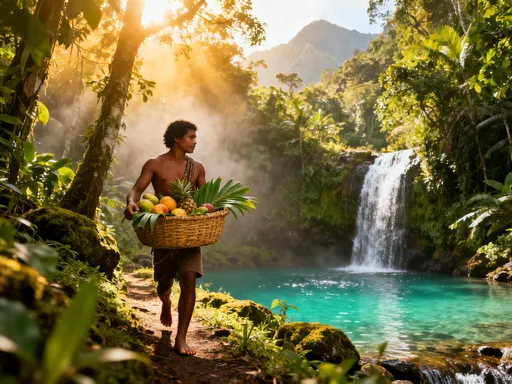
The Suriname River is more than a body of water; it is a living corridor that connects the capital to the interior, linking people, cultures, and ecosystems in a continuous flow. From its origin in the Guiana Shield to its wide mouth near the Atlantic coast, the river traverses diverse landscapes – flooded forests, mangrove swamps, and savannas – each with its own character and life. For centuries, it has served as a vital transportation route for Indigenous peoples, Maroon communities, and traders. Today, it remains the most scenic and immersive way to explore the country’s interior.
Boat trips from Paramaribo range from half-day excursions to multi-day expeditions, depending on how deep into the wilderness you wish to go. The journey begins near the Jules Wijdenbosch Bridge, where motorized canoes and small passenger boats depart for villages along the riverbanks. As the city fades behind, the landscape transforms. Houses give way to dense vegetation, and the sounds of traffic are replaced by the splash of paddles and the calls of kingfishers.
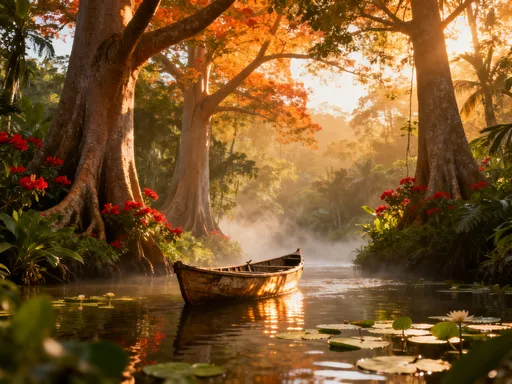
One of the most enchanting features of the river is the sight of flooded forests during the rainy season, when water levels rise and trees appear to grow directly from the river. These igapó forests create a surreal, almost dreamlike environment where roots become islands and branches serve as perches for birds and reptiles. Herons stalk shallow waters, caimans bask on muddy banks, and capybaras – the world’s largest rodents – graze near the shore.
Dolphins are another highlight. The Amazon river dolphin is well known, but fewer people realize that the Guiana dolphin, a smaller, pinkish-gray species, inhabits the brackish waters of the Suriname River’s lower reaches. They are shy and fast-moving, often seen in small groups, and spotting one feels like a gift from the river itself. Local guides know their habits and can help visitors observe them without disturbance.
Travelers also have the opportunity to visit Maroon villages, such as those of the Saramacca and Aukan peoples, who have lived along the river for generations. These communities maintain strong cultural traditions, including storytelling, drumming, and craftsmanship. Visits are conducted with permission and respect, often including a guided walk through the village, a shared meal, and sometimes a demonstration of traditional fishing techniques. These interactions offer a deeper understanding of how humans can live in harmony with the forest and river.
Safety and preparation are essential for river travel. Boats are typically equipped with life jackets, shade covers, and basic seating. Travelers should bring sunscreen, insect repellent, plenty of water, and lightweight clothing. Overnight trips require sleeping bags or hammocks, depending on the accommodation style. Guides are experienced in navigation and first aid, and communication devices are carried for emergencies. While the river is generally safe, conditions can change with weather and water levels, so flexibility is key.
For many, the river journey becomes the heart of their Suriname experience. There is something meditative about moving slowly through water, surrounded by green on all sides. Time slows down. The mind quiets. And in that stillness, a deeper connection to place emerges.
Central Suriname Nature Reserve: Wilderness at Its Most Pristine
If Brownsberg offers a taste of the wild and the Suriname River provides a glimpse into riverine life, the Central Suriname Nature Reserve represents the pinnacle of untouched wilderness. Spanning over 1.6 million hectares, this vast expanse of rainforest is one of the largest contiguous protected areas in the Amazon Basin. Unlike many reserves that are crisscrossed by roads or affected by nearby development, this region remains largely inaccessible – and therefore unspoiled.
There are no roads through the reserve. Access is limited to small charter flights or multi-day river journeys, both of which ensure that only those committed to the experience can reach its core. This isolation is precisely what makes the reserve so ecologically significant. It functions as a sanctuary for species that require large, undisturbed territories, including jaguars, giant otters, and harpy eagles. Scientists regard it as a living laboratory, where natural processes unfold without human interference.
Charter flights from Paramaribo typically land on a grass airstrip near the Coppename River or at research stations operated by conservation organizations. The flight itself is breathtaking – from above, the forest appears as an endless mosaic of green, broken only by winding rivers and occasional rock outcrops. There are no signs of human settlement, no cleared fields, no power lines. Just nature, uninterrupted.
Once on the ground, visitors are immersed in silence. Not absolute silence, but the absence of mechanical noise – no engines, no voices, no music. Instead, there is the rustle of leaves, the drip of water, the distant call of a bird. This auditory clarity heightens awareness. Every sound carries meaning. Every movement in the undergrowth invites attention.
Research stations within the reserve, such as those managed by STINASU or international partners, serve as bases for scientists and select eco-tourists. Accommodations are basic: wooden cabins with shared facilities, solar-powered lighting, and composting toilets. Meals are simple and locally sourced when possible. The emphasis is on minimal impact and maximum immersion.
Hiking trails are few and unmarked in many areas, requiring navigation by compass or GPS. Rangers accompany all groups, not only for safety but also to interpret the environment. They point out animal tracks, explain plant uses, and identify bird calls. Their knowledge, often passed down through generations, is invaluable.
The reserve’s biodiversity is staggering. It is home to over 400 bird species, 150 mammal species, and thousands of plant varieties, many of which are not found anywhere else. Orchids bloom on tree trunks, bromeliads collect rainwater in their cups, and buttress roots rise like cathedral walls. At night, the forest transforms – frogs begin their chorus, moths flutter around lanterns, and nocturnal mammals emerge.
Because of its ecological importance, the Central Suriname Nature Reserve is under consideration for UNESCO World Heritage status. This recognition would further strengthen conservation efforts and raise global awareness of its value. For now, it remains a place of profound solitude and beauty – a reminder of what much of the planet once looked like.
Wildlife You Didn’t Know Existed (And Where to See It)
Suriname’s forests and rivers host a menagerie of creatures that seem almost mythical to those unfamiliar with the Guianas. From the electric eel, capable of delivering a powerful shock to deter predators, to the golden-faced tamarin, a tiny primate with striking facial markings, the country’s wildlife is both diverse and elusive. Many species are rarely seen, not because they are extinct or endangered, but because they are naturally secretive and live in dense, hard-to-reach habitats.
One of the most iconic animals is the giant river otter. Larger and more social than its relatives, this otter can grow up to six feet long and lives in family groups along quiet river stretches. It is highly intelligent and vocal, using a range of calls to communicate. Unfortunately, it is also endangered due to habitat loss and past hunting, making sightings rare and precious. The best chances to see them are in remote parts of the Coppename or Saramacca rivers, where water quality is high and human disturbance is low.
The harpy eagle, one of the world’s most powerful raptors, soars above the tallest trees in search of sloths and monkeys. With a wingspan of up to seven feet and talons the size of grizzly bear claws, it commands respect. Though difficult to spot, experienced guides know where to look – often near large emergent trees where the eagles build their massive nests. Seeing one in flight is a moment few forget.
Reptiles and amphibians are equally fascinating. The Suriname toad, with its flat, leaf-like body and unusual reproductive method (the female carries eggs embedded in her back), is a marvel of evolution. Caimans, smaller cousins of crocodiles, are commonly seen at dusk along riverbanks. Tree boas, with their iridescent scales, coil silently in the branches, waiting for prey.
Fish diversity is extraordinary, especially in blackwater rivers where tannins from decaying leaves give the water a tea-like color. These conditions support species like the arapaima, one of the largest freshwater fish in the world, and the electric eel, which uses electric pulses to navigate and stun prey. While swimming in these waters is generally safe, it is done with caution and always under guidance.
Responsible wildlife observation is critical. Visitors are taught to keep a respectful distance, avoid feeding animals, and minimize noise. Flash photography is discouraged, and drones are typically prohibited without special permits. The goal is not to dominate the experience but to witness it with humility. When done right, wildlife viewing becomes a form of reverence – a way of honoring the lives that thrive in these forests.
How to Plan a Nature-Focused Trip from Paramaribo
Planning a trip into Suriname’s wild spaces requires preparation, but the effort is rewarded with unforgettable experiences. The first step is choosing the right season. The country has two rainy seasons – from April to August and November to January – and two drier periods in between. The dry seasons are generally ideal for travel, as river levels are lower, trails are less muddy, and mosquitoes are less abundant. However, the rainy season brings its own beauty, with lush vegetation and fuller waterfalls.
Transportation options vary by destination. For Brownsberg and nearby reserves, guided tours from Paramaribo typically include round-trip transport by 4x4 vehicle and boat. For more remote areas like the Central Suriname Nature Reserve, small charter planes operated by licensed companies are necessary. These flights must be booked in advance and are weather-dependent.
Selecting a reputable tour operator is crucial. Look for companies registered with the Suriname Ministry of Tourism and trained in eco-tourism practices. Many are locally owned and employ Indigenous or Maroon guides, which supports community-based tourism. Reading reviews, asking for references, and confirming insurance coverage are all wise steps.
Permits are required for entry into national parks and protected areas. These are usually arranged by tour operators, but travelers should confirm that all documentation is in order. Some areas, particularly near Indigenous lands, require additional permissions, which guides will help obtain.
Accommodation ranges from eco-lodges with basic amenities to camping in the forest. Eco-lodges offer comfort without luxury – think screened windows, outdoor showers, and meals made from local ingredients. Camping allows deeper immersion but requires proper gear and preparation. Either way, electricity may be limited, and internet access is often nonexistent.
Packing essentials include lightweight, quick-dry clothing, a wide-brimmed hat, waterproof hiking shoes, insect repellent with DEET, a headlamp, a reusable water bottle, and a first-aid kit. A good pair of binoculars enhances wildlife viewing, and a field guide can help identify birds and plants. Travelers should also bring any necessary medications and copies of important documents.
Respect for local customs and the environment is expected. Littering is strictly prohibited, and all waste must be carried out. Visitors should follow the principle of “leave no trace” – taking only photos, leaving only footprints. By traveling responsibly, visitors help ensure that Suriname’s wild places remain pristine for future generations.
Why This Journey Changes How You See Nature
Traveling into the heart of Suriname is not like visiting a zoo, a theme park, or even a well-known national park. It is an encounter with nature in its most fundamental form – unedited, uncurated, and unrehearsed. There are no visitor centers with interactive displays, no timed entry slots, no souvenir shops. Instead, there is presence. There is attention. There is the simple act of being in a place where life operates on its own terms.
For many, the experience is transformative. The constant buzz of modern life – emails, notifications, schedules – fades into irrelevance. In its place is a different kind of awareness: the sound of rain on leaves, the movement of a sloth through the canopy, the stillness of a forest at dawn. This shift is not just sensory; it is emotional and mental. People report feeling calmer, more centered, more connected to something larger than themselves.
That connection matters. In a world where forests are disappearing, rivers are polluted, and species are vanishing, places like Suriname remind us of what is possible. They show that coexistence is not just a dream but a reality that already exists. They challenge the assumption that progress must come at nature’s expense. And they inspire a deeper commitment to conservation – not out of guilt, but out of love.
Preserving such places is not just about protecting animals or trees. It is about safeguarding a way of being. It is about ensuring that future generations can still feel awe, still hear silence, still stand beneath a sky full of stars undimmed by light pollution. Suriname offers a rare glimpse of that world – not as a museum piece, but as a living, breathing reality.
So if you’re ready to step beyond the ordinary, to trade convenience for meaning, and to see nature not as a backdrop but as a teacher, then consider this your invitation. Jungle, canals, and sky-high trees await. You gotta see this place – not just with your eyes, but with your whole self.