Overwhelmed by chaotic family schedules? This simple app brought us peace
Remember those evenings when dinner burns while you’re helping with homework, and your phone buzzes with a forgotten meeting? I lived that chaos too. As a parent juggling work and family, I felt constantly torn. Between school drop-offs, grocery runs, team practices, and last-minute emails, I was always doing something—but never fully present for anyone. The truth hit me one night when my youngest asked, 'Mom, why do you look so tired all the time?' That question stayed with me. I wasn’t just busy—I was drowning in motion without meaning. But everything shifted when I started using a time-tracking app—not for work, but for us. It didn’t just organize minutes; it gave us back connection, calm, and even bedtime smiles. And the best part? It didn’t require a tech degree or a complete lifestyle overhaul. Just a little curiosity, a shared intention, and one simple tool that helped us see our days differently.
The Breaking Point: When "Busy" Became Too Much
There was a week last spring when everything seemed to collide. My older daughter had a science fair project due Monday, my son’s soccer game was rescheduled to the same evening as a work call I couldn’t miss, and I had promised to bake cupcakes for the class party—all while trying to keep up with laundry, meals, and the never-ending stream of school forms. I remember standing in the kitchen, one hand on a sizzling pan, the other scrolling through my calendar, when my daughter quietly said, 'You forgot to sign my permission slip again.' Her voice wasn’t angry—just sad. And in that moment, I realized I wasn’t just forgetting slips. I was missing moments. The kind of moments that don’t show up on a to-do list but live in a child’s memory: the bedtime story read slowly, the shared laugh over burnt toast, the quiet walk after school when they finally open up.
We often wear "busy" like a badge of honor, as if the more we pack into a day, the more we’re doing right. But I was beginning to see that my version of productivity was actually stealing from the people I loved most. I was physically present but mentally scattered—always thinking three steps ahead, never fully here. The guilt built up slowly, like layers of unwashed dishes. I wasn’t failing because I wasn’t trying hard enough. I was failing because I had no real picture of how we were spending our time. I assumed I knew—until I realized I didn’t. That’s when I started wondering: what if there was a way to see our days clearly, not to judge them, but to understand them? What if we could stop reacting to chaos and start designing our days with more intention?
Discovering Time Tracking Beyond Work
When I first heard about time tracking, I associated it with freelancers logging billable hours or professionals optimizing their workdays. The idea felt cold, mechanical—like something that belonged in an office, not in a home filled with sticky fingers and bedtime stories. But then I read about a mom who used a simple app to track her family’s screen time, and something clicked. What if we used time tracking not to measure output, but to measure presence? Not to squeeze more in, but to make room for what mattered?
I downloaded a basic time-tracking app—nothing fancy, just one that let you tag activities and view them in colorful charts. I started small, tracking just a few things: meals, homework, playtime, and bedtime routines. At first, it felt silly, like I was overanalyzing motherhood. But within days, patterns began to emerge. I noticed we were spending nearly two hours a day on screens during the week—mostly me catching up on emails or news, the kids on cartoons. Meanwhile, our family reading time had dwindled to less than ten minutes a night, if we remembered at all. I also saw how often our evenings started with tension—usually because someone was hungry, tired, or hadn’t finished homework—and how that tension spilled into bedtime, making it harder for everyone to wind down.
The app didn’t shame me. It showed me. And in that showing, it gave me power. I wasn’t blind anymore. I could see where time was going and where it was missing. This wasn’t about perfection—it was about awareness. And for the first time in years, I felt like I wasn’t just reacting to the day. I was beginning to understand it.
Choosing the Right Tool (Without the Tech Stress)
I’ll be honest—I almost gave up in the first week. Some apps were too complicated, with features that felt like they belonged in a project management suite. Others required constant logging, which just added to the stress. I needed something simple, something that didn’t feel like another chore. What I realized was that the best tool for family life isn’t the most advanced one—it’s the one everyone can use without frustration.
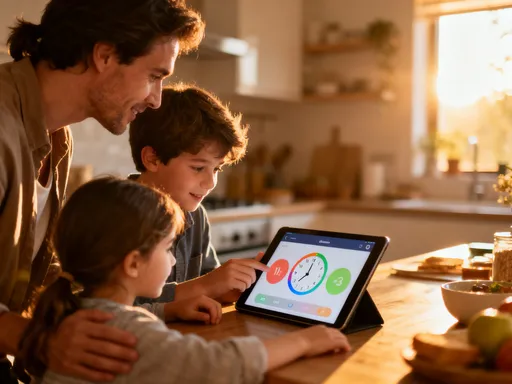
After trying a few, I settled on an app that let us log time with just a tap. It had color-coded tags—blue for school, green for play, yellow for chores, red for screen time—so even my six-year-old could participate. We set it up on both my phone and my partner’s, and within a few days, the kids started asking, 'Did you log storytime?' It became a little game, a shared language. The app synced automatically, so we could see our week’s overview together during Sunday evenings. No passwords, no training videos, no confusing menus. Just a shared window into our time.
What mattered most was that it felt gentle. It didn’t send nagging alerts or scold us for going over time. Instead, it offered soft reminders—like a friendly nudge to log dinner or wind down for bed. We could add notes, too, like 'Great mood tonight!' or 'Homework was tough.' Over time, those notes became a kind of family journal, showing not just what we did, but how we felt while doing it. The tool wasn’t the hero. It was the quiet helper, the one that made reflection possible without demanding perfection.
Building the Family Rhythm: From Tracking to Trust
The real shift didn’t happen in the first week or even the first month. It happened when my daughter said, 'Mom, I feel calmer when we read before bed. Can we keep doing that?' That moment took my breath away. She wasn’t just noticing a routine—she was connecting it to how she felt. And she felt safe enough to speak up. That’s when I realized the app wasn’t just tracking time. It was building trust.
We started logging everything—not to police ourselves, but to learn. We tracked meals, homework, playdates, even the quiet moments when we sat together without screens. After a few weeks, we sat down as a family to look at our time chart. The kids were fascinated. 'We spend so much time on homework!' my son said. 'But we only play outside for 20 minutes?' That sparked a conversation about balance. We began co-creating our routines instead of imposing them. Homework got broken into 25-minute chunks with five-minute dance breaks. We moved screen time to after dinner, so mornings stayed calm. And yes, we protected bedtime reading—now it’s non-negotiable, and the kids remind me if we’re running late.
What surprised me most was how much ownership the kids took. They started suggesting changes: 'Can we do grocery shopping on Saturday morning so we have more time for the park?' 'What if we pack lunches the night before?' These weren’t my ideas—they were theirs. And because they came from within the family, they stuck. The app didn’t command. It revealed. And in that revelation, it gave us the power to choose differently.
Turning Data into Daily Wins
One of our biggest 'aha' moments came when we looked at how long grocery shopping actually took. The app showed we were spending an average of two and a half hours each week—mostly because we’d show up unprepared, wandering the aisles, forgetting half the list. So we started doing a quick family planning session every Friday night. The kids helped write the list, picked a new recipe to try, and even 'assigned' stickers to tasks—like 'Dad packs snacks' or 'Ivy chooses fruit.'
The change was immediate. Our trips got shorter, less stressful, and even fun. The kids loved being part of the process, and I loved not feeling like a short-order cook on autopilot. But the real win was how it changed our mindset. Instead of seeing chores as burdens, we started seeing them as shared projects. Homework resistance dropped because we used the app to break it into manageable chunks. We’d say, 'Let’s do 25 minutes of math, then a five-minute break to jump on the trampoline.' The timer wasn’t a threat—it was a promise. And because the kids could see the time passing on the screen, they felt more in control.
Even small things improved. We noticed we were often rushing through dinner, which made bedtime harder. So we started using the app to track mealtime length and found that adding just ten more minutes—enough to actually talk—made a huge difference. The kids shared more about their days, and we ended meals feeling connected, not drained. These weren’t grand transformations. They were tiny wins, built on shared awareness. But together, they added up to a calmer, more connected home.
Deepening Connection, One Minute at a Time
The most unexpected benefit wasn’t better schedules or fewer meltdowns. It was how much closer we felt. When we stopped scrambling through the day, we started noticing each other. Eye contact returned. So did laughter. Conversations didn’t have to be forced—they just happened, in the spaces we’d reclaimed.
We started using the app in a new way: tagging our moods alongside activities. We picked simple colors—red for frustrated, yellow for tired, green for happy, blue for calm. At first, the kids thought it was silly. But soon, they began to notice patterns. My son said, 'I feel red when we have too much screen time.' My daughter said, 'I feel green when we bake together.' These weren’t just observations—they were invitations to talk. We began checking in more often, not because we had to, but because we wanted to.
One afternoon, my son looked at the chart and said, 'This was a green afternoon.' I smiled, surprised. 'Why?' He shrugged. 'We played cards, you didn’t check your phone, and we had cookies.' That moment stayed with me. It wasn’t about productivity or efficiency. It was about presence. The app had helped us create the conditions for joy—not by adding more, but by protecting what already mattered. And in doing so, it taught us to recognize it when it happened.
Sustainable Habits: Keeping It Real, Not Perfect
Let’s be clear—this isn’t a perfect system. There are days when the app gets ignored. Days when soccer practice runs late, dinner is frozen pizza, and no one remembers to log anything. And you know what? That’s okay. The goal was never to create a flawless schedule. It was to create a more mindful one. One where we could notice when things were off and gently course-correct, without guilt or blame.
What’s helped us stay consistent is our weekly check-in. Every Sunday evening, we gather with snacks and look at the past week’s time chart. We ask simple questions: 'What worked well?' 'What felt rushed?' 'What would we like to try differently?' The kids love this part. They’ll say things like, 'Can we have more green afternoons?' or 'Maybe we should do homework earlier.' These aren’t demands—they’re requests, born from reflection. And because they come from a place of shared understanding, they’re easier to honor.
The app isn’t a ruler. It’s a mirror. It doesn’t tell us how to live—it shows us how we *are* living. And from that awareness, we make choices. Some weeks, we focus on more outdoor time. Others, we protect family meals. There’s no pressure to optimize every minute. There’s only the quiet intention to care—for our time, and for each other.
More Than Minutes—More Meaning
In the end, the app didn’t change our lives because it was clever or high-tech. It changed our lives because it helped us see what we couldn’t see before: that time isn’t just something we spend. It’s something we share. And how we share it shapes how we feel, how we connect, and what we remember.
We used to run from one thing to the next, thinking we were managing our days. Now, we pause. We notice. We choose. The chaos hasn’t disappeared—but it no longer controls us. We’ve learned to protect the small moments, because they’re not small at all. They’re the fabric of our family life: the bedtime story, the shared snack, the unplanned laugh in the car.
Technology often gets praised for how fast it moves us. But this app taught me the power of slowing down. It didn’t give me more hours in the day. It gave me more presence within them. And that’s made all the difference. If you’re feeling overwhelmed, stretched thin, or just disconnected from the rhythm of your home, I’ll say this: try it. Not for control. Not for perfection. But for clarity. Because when we see our time clearly, we stop surviving—and start living. Together. And that, more than any app, is the real gift we’ve given each other.