It’s Not Just About Learning: How Online Platforms Finally Helped Me Care for My Body
We’ve all been there—hunched over a screen, neck stiff, eyes tired, sipping coffee long after noon, telling ourselves, “Just one more lecture.” I did it for years, chasing knowledge online while ignoring the aches creeping in. But what if the same platforms we use to learn could also help us heal? Not with gimmicks, but with gentle reminders, smart nudges, and real-time awareness that finally made me listen to my body. This isn’t about adding another chore—it’s about making growth feel whole.
The Hidden Cost of Sitting Still: When Learning Hurts More Than It Helps
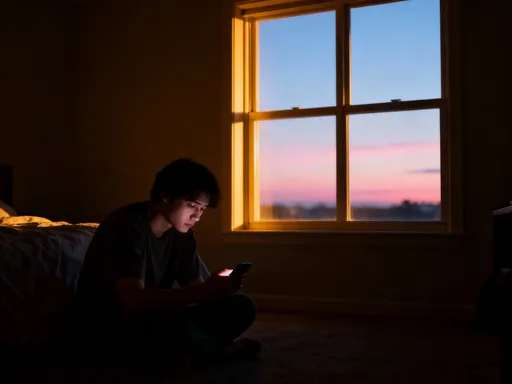
Remember that weekend when you promised yourself a fresh start? I did. I cleared the kitchen table, loaded up three online courses, and told my family I’d be “just a few hours” on the computer. Five hours later, I was still there—eyes dry, shoulders tight, one hand instinctively rubbing the base of my neck. My daughter asked if I was okay, and I smiled and said yes. But I wasn’t. I was sore, drained, and honestly a little frustrated with myself. I’d spent all that time learning about mindfulness and productivity, yet I couldn’t even notice when my body was screaming for a break.
That moment hit me hard. I realized I’d been treating my body like background noise—something to power through while my mind did the important work. But here’s the truth: self-improvement doesn’t mean ignoring pain. In fact, it’s the opposite. True growth means paying attention. And yet, so many of us—especially women in our 30s, 40s, and beyond—have been taught to push through. We juggle work, family, meals, and personal goals, often at the cost of our own comfort. We tell ourselves, “I’ll rest later,” but later rarely comes.
What made it worse was that the very tools meant to help me grow—online learning platforms—were quietly contributing to the problem. They were designed to keep me engaged, to make me watch “just one more video,” to celebrate streaks and badges. But no one was celebrating the fact that I hadn’t moved in 90 minutes. No one was checking in to ask how my back felt. The system rewarded focus, not well-being. And I began to wonder: could it be different?
“I Didn’t Even Notice I Was Holding My Breath”: How Awareness Comes First
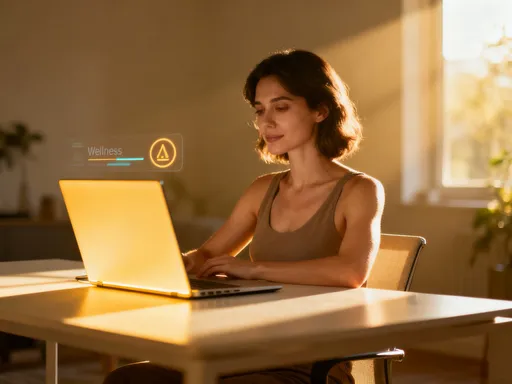
It started with a simple pop-up. I was halfway through a lesson on time management—ironic, I know—when a small message appeared in the corner of my screen: “Pause for a breath. You’ve been focused for 25 minutes.” I almost dismissed it, like I would any other notification. But something about the tone felt different. It wasn’t demanding. It wasn’t shaming. It was gentle, like a friend gently tapping my shoulder.
I took the suggestion. I closed my eyes, inhaled slowly through my nose, and exhaled through my mouth. And in that moment, I realized I’d been holding my breath without even knowing it. My chest was tight. My shoulders were up near my ears. It was a wake-up call. How many times a day was I doing this? How long had I been living in this low-level state of tension without noticing?
That small prompt changed everything. It wasn’t about adding another task to my day. It was about retraining my awareness. Over the next few weeks, I began to notice more of these thoughtful features across different platforms. Some would remind me to blink after prolonged screen time. Others would suggest a quick neck stretch after detecting long periods of inactivity. One even played a soft chime and said, “Your posture might be off. Try adjusting your chair.” At first, I rolled my eyes. But then I sat up straighter—and immediately felt better.
These weren’t medical alerts or strict rules. They were nudges—tiny invitations to check in with myself. And over time, they helped me rebuild a connection with my body that I hadn’t realized I’d lost. I started noticing tension before it turned into pain. I caught myself slouching and corrected it. I began to feel more present, not just in my learning, but in my life.
Beyond the Pop-Up: Design That Cares, Not Just Performs
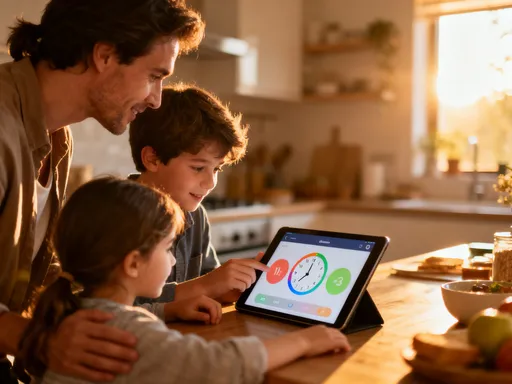
What surprised me most was how much thought was going into these features. It wasn’t just random alerts. These platforms were being redesigned with real care—what I now think of as “kind technology.” One course platform I use lets me customize break intervals. I set it to remind me every 30 minutes, and when the time comes, the screen dims slightly and a soft animation of a stretching figure appears. It’s not jarring. It’s welcoming.
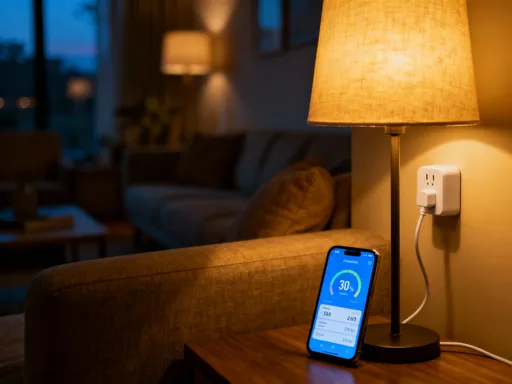
Another platform syncs with my calendar and suggests optimal learning windows based on my energy levels—something I’d tracked in a wellness journal for months. It even adjusts the brightness of the interface depending on the time of day, reducing blue light in the evening to protect my sleep. These aren’t flashy features, but they make a real difference. They make me feel seen, not just as a learner, but as a whole person.
What I appreciate most is that these tools don’t assume I’m young, flexible, or tech-savvy. They’re designed to be simple, accessible, and non-judgmental. For example, the stretching suggestions don’t show complicated yoga poses. They’re basic movements—shoulder rolls, wrist circles, gentle neck tilts—that anyone can do, even in a kitchen or home office. There’s no pressure to perform. Just an invitation to move.
And the language matters. Instead of saying “You’ve been inactive too long,” it says “Your body might enjoy a stretch.” Instead of “Warning: poor posture detected,” it says “Try sitting a little taller—your spine will thank you.” The tone is supportive, not scolding. It’s the kind of voice I’d want to hear from a caring friend, not a robot. This shift in design philosophy—prioritizing well-being over engagement—feels revolutionary. It tells me that my health isn’t separate from my learning. It’s part of it.
My Laptop Started Feeling Like a Coach—And I Was Surprised How Much I Needed It
I’ll admit it: I didn’t think I needed a digital coach. I’ve been managing my life for decades. I’ve raised kids, held jobs, and kept homes running. But what I didn’t realize was how much I’d stopped listening to my body. I was so used to pushing through fatigue, tension, and stress that I didn’t know how to stop. And that’s where these quiet, consistent nudges made a real difference.
One of the first habits I built was stretching between lessons. At first, it felt silly. I’d stand up, roll my shoulders, and do a few side bends—just like the little animation showed. But after a few days, I started to look forward to it. It became a ritual, a moment of pause in the middle of my busy day. I’d stretch, take a sip of water, maybe step outside for a breath of fresh air. And when I sat back down, I felt clearer, calmer, more focused.
Then I started standing while watching videos. I cleared a corner of the dining table and propped my laptop on a stack of books. At first, I worried I wouldn’t be able to concentrate. But the opposite happened. I felt more alert, less sluggish. And when my platform reminded me after 20 minutes to “try sitting or moving,” I’d switch back, feeling grateful for the choice.
Hydration became easier too. One app I use has a simple feature: every time I take a break, it asks, “Did you drink water?” I set a goal of four checkmarks a day. It sounds small, but it made a difference. I stopped reaching for that third cup of coffee and started keeping a glass of water nearby. My energy felt more stable. My headaches decreased. And my skin? Let’s just say I got a few compliments I hadn’t earned in years.
These changes didn’t happen overnight. But because the technology made them so easy—so gentle—they stuck. I wasn’t forcing myself to “be healthy.” I was being guided, supported, reminded. And that made all the difference.
Syncing Life, Not Just Devices: When Learning Platforms Talk to Your Watch (and Your Routine)
The real magic happened when my learning platform started talking to my fitness tracker. I didn’t plan it that way. I just connected the accounts one evening, curious to see what would happen. The next day, something unexpected occurred: I was halfway through a lesson when my watch buzzed. I glanced down and saw a message: “Your heart rate is elevated. Consider a short break.” I hadn’t noticed. I was deep in thought, analyzing a case study. But my body was stressed.
I paused the video, stood up, and took a walk around the living room. I breathed deeply, stretched my arms overhead, and came back feeling calmer. The lesson was still there, but now I was in a better state to absorb it. That moment taught me something powerful: my mind and body aren’t separate. When one is strained, the other suffers.
Since then, the integration has become a seamless part of my routine. After 30 minutes of focused learning, my watch might suggest a two-minute stretch. If I’ve been sedentary all morning, my learning app adjusts and encourages me to start the day with a short movement break before diving in. If I’ve had a good night’s sleep, it celebrates with a cheerful “You’re ready to learn!” message. It feels like my devices are finally working together—not just to track me, but to support me.
And the best part? It doesn’t overwhelm me with data. I don’t need to study charts or decode heart rate variability scores. The system translates everything into simple, kind suggestions. No pressure. No guilt. Just care. It’s like having a quiet partner who knows when I need a nudge, a pause, or a moment of encouragement.
Not Just for the Young or Tech-Savvy: Wellness Tools That Work for Everyone
I used to think these features were for someone else—someone younger, more energetic, more fluent in tech. But then I introduced them to my sister, who’s in her 50s and runs a small bakery. She spends hours on her feet, but her online bookkeeping course left her with constant neck pain. I showed her how to enable posture alerts and set stretch reminders. At first, she laughed. “You want me to stretch between invoices?” But she tried it. Now, she says those two-minute breaks are the only reason she finishes her work without a headache.
Then there’s my friend Maria, a mom of three, who’s going back to school part-time. She told me she used to feel guilty taking breaks, like she was wasting time. But when her learning platform started saying, “Your brain learns better with rest,” she felt permission to pause. Now, she stretches while her kids play nearby, and sometimes they even join in. “It’s become our little moment together,” she said. “And I’m actually remembering more of what I study.”
These stories remind me that wellness technology isn’t about being perfect or athletic or trendy. It’s about being human. It’s for the woman learning a new language at 45. For the grandmother taking a painting class online. For the busy professional brushing up on skills between meetings. These tools aren’t exclusive. They’re inclusive. They meet us where we are—tired, busy, determined—and say, “You matter. Your body matters.”
And they’re designed to be easy. No complicated setup. No technical expertise needed. Most platforms now offer one-click wellness settings, with clear explanations and simple on/off toggles. You don’t need to be a coder or a fitness influencer to benefit. You just need to be willing to listen—to your body, and to the quiet, kind voice of technology that’s finally learning to care.
Learning That Feels Whole: Why Growth Shouldn’t Hurt
Looking back, I realize how much I used to equate growth with discomfort. I thought that if it didn’t feel hard, I wasn’t doing it right. But true growth—real, lasting change—shouldn’t leave you sore, drained, or disconnected from yourself. It should feel sustainable. It should feel good.
These new wellness-integrated learning platforms have taught me that caring for my body isn’t a distraction from my goals. It’s part of achieving them. When I’m rested, hydrated, and moving, I think more clearly. I remember more. I feel more confident. I’m not just learning—I’m thriving.
And that’s the shift I hope more women my age can embrace. We’ve spent so much of our lives putting others first—our kids, our partners, our jobs. It’s time to include ourselves in that care. Technology, when designed with empathy, can help us do that. It can remind us to breathe, to stretch, to rest—not because we’re weak, but because we’re wise.
So the next time you sit down to learn, ask yourself: what’s the platform doing for your body, not just your brain? If it’s only feeding your mind, it’s only doing half the job. But if it’s also checking in on your posture, your breath, your energy—then you’re using a tool that truly understands what growth means. And that, my friend, is technology worth celebrating.